OFFICIAL DEATH CERTIFICATE
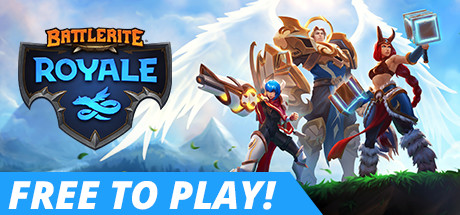
Battlerite Royale
Stunlock Studios
Born
2019-02-18
Game Over
2022-09-10
Lifespan (3.6 years)
Vital Signs
Advertisement
Autopsy Report
Autopsy Report
Battlerite Royale is the game that killed Battlerite and then died next to the body. Developed by Stunlock Studios as a battle royale spin-off of their beloved arena brawler, it represents one of the most self-destructive strategic decisions in indie gaming history: taking a game with 85% positive reviews and 2-5 million passionate owners, and diverting its development resources to chase a trend that was already saturated.
The concept wasn’t terrible on paper. Take Battlerite’s excellent champion combat — top-down, ability-based, skill-intensive — and drop it into a shrinking-circle battle royale format on the fantastical Talon Island. Champions looted for ability upgrades, fought PvE creatures, and battled each other until one survived. The 74% Mostly Positive review score from 8,161 reviewers confirms the combat mechanics transplanted well. But mechanics alone don’t make a viable product.
The timing was catastrophic at every stage. Battlerite Royale entered Early Access in September 2018 as a paid $19.99 game — in a genre where Fortnite was free and dominating global culture. Who was going to pay $20 for an unproven top-down BR from a small Swedish studio when the most popular game on the planet was free and first-person? The F2P transition came in February 2019, the exact month Apex Legends surprise-launched and captured 50 million players in 28 days. Battlerite Royale’s F2P moment was drowned by the biggest BR launch since Fortnite itself.
The audience math never worked. Battlerite’s community wanted arena PvP — short, intense, skill-based matches. The BR audience wanted the survival tension of first and third-person perspectives — looting buildings, peeking corners, the adrenaline of shrinking circles in a 3D world. A top-down MOBA-BR hybrid fell between both audiences and satisfied neither. The 94.1 reviews per month — compared to Battlerite’s 579.3 — tells the engagement story: the spin-off generated one-sixth of the community engagement of the game it cannibalized.
The owners-to-review ratio of 123:1 is telling. Unlike Battlerite’s passionate 34:1 ratio, the Royale game inspired standard F2P indifference — people downloaded it, tried it, and left without strong enough feelings to write a review. The 1-2 million owners were largely Battlerite players checking out what killed their game, not a new audience discovering something fresh.
Four current players is the final verdict. For a battle royale game that needs 20+ players to form a single match, four players means the game has been functionally unplayable for years. Battlerite Royale didn’t just fail — it proved that no amount of good combat mechanics can save a product that launches into the wrong market, at the wrong time, targeting the wrong audience.
Key Failure Factors
-
Arrived at a Saturated Party: The battle royale market was already dominated by Fortnite (350M+ accounts), PUBG (70M+ sales), and the incoming Apex Legends. Battlerite Royale’s 1-2 million owners were a rounding error against these numbers, and a top-down perspective wasn’t a compelling enough differentiator.
-
The Apex Legends Collision: The F2P transition in February 2019 landed in the same month as Apex Legends’ surprise launch, which captured 50 million players in its first month. Any visibility Battlerite Royale might have gained from the F2P conversion was completely eclipsed.
-
Paid-Then-Free Whiplash: Launching at $19.99 in Early Access, then going F2P five months later, alienated both early adopters (who felt overcharged for a beta) and the broader audience (who weren’t going to pay premium for an unknown BR when Fortnite was free).
-
Cannibalized the Parent Game: Resources diverted from Battlerite’s 59,266-review community to build a spin-off that generated only 8,161 reviews. The math is stark: Stunlock traded a passionate community for one-seventh the engagement in a genre they couldn’t compete in.
Lessons for Developers
-
Arriving late to a saturated genre requires a 10x differentiator, not a 2x twist. A top-down perspective was genuinely different from other BR games, but it wasn’t compelling enough to pull players from Fortnite, PUBG, or Apex. In saturated markets, incremental innovation is invisible — you need radical departure (like Fall Guys’ party-game approach) to break through.
-
Don’t cannibalize your existing product to chase a trend. Battlerite Royale diverted resources from a game with 85% positive reviews and generated 1/6th the community engagement. The combined result was two dead games instead of one healthy one — a net negative by any measure.
-
Paid Early Access in a F2P-dominated genre is a non-starter. Charging $19.99 for a battle royale game when Fortnite was free created an immediate barrier. The subsequent F2P transition five months later confirmed the pricing mistake and created a perception of desperation.
Related Deaths
- Battlerite — The parent game, killed by the very spin-off it spawned. Both games died because Stunlock couldn’t sustain two live service products with one small team.
- Realm Royale — Another MOBA-to-BR conversion (from Paladins developer Hi-Rez) that followed the same pattern of initial curiosity and rapid decline.
- Darwin Project — An indie BR with a unique twist (show director mechanic) that similarly couldn’t compete with established titles in the saturated market.