OFFICIAL DEATH CERTIFICATE
Mighty No. 9
Comcept
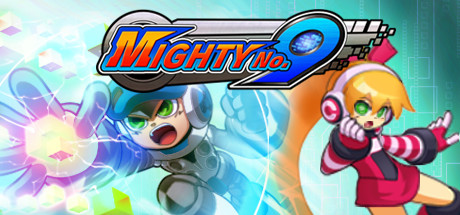
Born
2016-06-22
Game Over
2021-05-13
Lifespan (4.9 years)
Vital Signs
Advertisement
Autopsy Report
Autopsy Report
Mighty No. 9 is crowdfunding’s most expensive cautionary tale — a $3.8 million Kickstarter that bought the gaming industry’s most perfectly split review score.
The premise was irresistible: Keiji Inafune, the man synonymous with Mega Man, would create a spiritual successor free from Capcom’s corporate grip. In September 2013, 67,226 backers threw money at the screen, making it one of the most-funded game Kickstarters in history. Nearly three years later, they received a game that managed to disappoint exactly half of everyone who played it.
The numbers tell a story of mathematical misery. Of 3,407 Steam reviews, 1,710 are positive and 1,697 are negative — a 50% split so precise it feels like a cosmic joke. The game attracted 28.6 reviews per month, a velocity sustained not by love or even productive hate, but by the game’s ongoing role as Exhibit A in every “Kickstarter gone wrong” article ever written.
The root failure was design, not ambition. Mighty No. 9 promised to transform “the best elements from 8 and 16-bit classics” with “modern tech” and “fresh mechanics.” What arrived was a 2.5D platformer with a dash-absorb mechanic that felt clunky, levels that lacked the precision and personality of the Mega Man games it invoked, and visuals that looked dated on arrival. The Kickstarter tags on Steam — Platformer, Retro, 2.5D — describe a game positioned entirely on nostalgia, and nostalgia without execution is just disappointment with a fundraising page.
Comcept’s budget allocation was indefensible. Rather than focusing the $3.8M on delivering one exceptional game, resources were spread across PC, Mac, Linux, and console ports, a companion title (Mighty Gunvolt), and an animated series. The multi-platform launch is visible in the data: PC, Mac, and Linux support from an indie studio that should have picked one and nailed it. Every stretch goal was a resource drain on the core product.
The marketing failure compounded everything. Inafune’s pre-launch trailer, which encouraged fans to “make them cry like an anime fan on prom night,” became an internet meme that crystallized the community’s frustration. By launch day, the narrative had shifted from “spiritual successor” to “spiritual betrayal.”
With 200,000-500,000 estimated owners but a single concurrent player today, Mighty No. 9 is a game that was purchased on hope and abandoned on contact. The 59:1 owner-to-review ratio suggests many buyers — likely Kickstarter backers who received keys — didn’t even bother reviewing. They just quietly moved on, leaving behind a $2.99 clearance-bin listing that stands as a monument to the gap between what crowdfunding promises and what it delivers.
Comcept was absorbed into Level-5 in 2017. Meanwhile, Capcom released Mega Man 11 in 2018 to strong reviews, proving the formula still worked when executed by a team with proper resources and focus. The sequel nobody needed turned out to be the game everyone wanted.
Key Failure Factors
-
50% Review Split: 1,710 positive vs 1,697 negative reviews — a perfectly polarized reception that reflects a game satisfying neither its nostalgic audience nor newcomers
-
$3.8M Budget Scattered: Kickstarter funds diluted across multi-platform ports (PC/Mac/Linux plus consoles), a companion game, and an animated series instead of focusing on core gameplay quality
-
Zero Player Retention: 200,000-500,000 estimated owners reduced to 1 concurrent player with 0 average playtime — a 99.9998% abandonment rate
-
Tone-Deaf Marketing: The infamous “anime fan on prom night” trailer converted pre-launch skepticism into active hostility, ensuring the game launched into a hostile audience
Lessons for Developers
-
Crowdfunding hype creates impossible expectations. Mighty No. 9’s $3.8M Kickstarter set a quality bar that “decent” couldn’t clear. The 50% review score represents a game that might have been received as “okay” at $15 with no hype, but was judged as a betrayal at any price with $3.8M of emotional investment. Manage expectations or deliver exceptional quality — there is no middle ground.
-
Scope creep is the silent killer of funded projects. Every stretch goal and platform port was a resource drain. The data shows PC, Mac, and Linux support from a studio that should have focused on one platform. Shovel Knight — a contemporary Kickstarter success — launched focused and expanded later. Mighty No. 9 tried to launch expanded and never achieved focus.
-
Individual pedigree does not equal studio capability. Inafune’s Mega Man legacy carried the Kickstarter, but Comcept as a studio had zero shipped titles. The studio was absorbed within a year of launch. When evaluating a project, distinguish between what a person has done at a resourced organization and what a new studio can deliver from scratch.
-
Marketing tone must match audience mood. The “anime fan on prom night” trailer launched into a community already anxious about delays. Reading the room is not optional — one tone-deaf marketing moment can define a game’s entire narrative.
Related Deaths
- Artifact — Another highly anticipated game from a legendary creator (Gabe Newell/Valve) that failed to connect with players, proving that name recognition cannot substitute for product-market fit
- Radical Heights — Developer hubris meeting market reality in a different genre, with similar results: rapid launch-to-death trajectory
- Takedown: Red Sabre — Fellow Kickstarter game from an industry veteran that failed to deliver on nostalgia-driven promises with insufficient studio capability