OFFICIAL DEATH CERTIFICATE
Atlas Reactor
Trion Worlds
Born
2016-10-03
Game Over
2018-10-03
Lifespan (2.0 years)
Vital Signs
Advertisement
Autopsy Report
Autopsy Report
Atlas Reactor was the game your favorite streamer never heard of. A simultaneous-turn tactical PvP game where four freelancers per team locked in their moves and watched the chaos unfold — imagine XCOM meets Overwatch, except everyone moves at once. Developed and published by Trion Worlds, it launched in October 2016 to an 84% positive review score from 5,284 reviewers. The people who played it adored it. The problem was that almost nobody played it.
The concept was genuinely novel. Simultaneous-turn resolution created a mind-game layer where predicting your opponent’s positioning mattered as much as your ability selection. Each freelancer had a unique kit, the matches were 20 minutes of distilled tactical tension, and the art direction was colorful Saturday-morning-cartoon meets cyberpunk. The 84% “Very Positive” rating on Steam confirms this wasn’t a case of bad game design — it was a case of bad market fit.
Atlas Reactor launched into the October 2016 multiplayer landscape dominated by Overwatch, which had launched five months earlier and was consuming every competitive multiplayer player’s attention. The hero-based game audience in 2016 wanted real-time action — fast reflexes, mechanical skill, instant gratification. Turn timers and planning phases were a hard sell. The game’s F2P model should have lowered the barrier, but 500K-1M estimated owners for a free game is modest at best. The owners-to-review ratio of 95:1 tells the real story: most people who downloaded Atlas Reactor tried it once or twice and moved on without engaging enough to write a review.
The matchmaking death spiral was inevitable. A multiplayer-only game with no singleplayer fallback needs a critical mass of concurrent players. When queue times crept past a few minutes, casual players — the lifeblood of any F2P game — disappeared. The remaining hardcore fans found themselves waiting longer and longer for increasingly lopsided matches, a cycle that feeds on itself until there’s nobody left.
What finally killed Atlas Reactor wasn’t the playerbase, though — it was the parent company. Trion Worlds had been struggling financially for years, stretched across Rift, Trove, Defiance, and Atlas Reactor. In October 2018, exactly two years after Atlas Reactor’s launch, Trion was acquired by German gaming company Gamigo amid layoffs and financial distress. Atlas Reactor’s servers went dark. The 84% review score meant nothing once the power was cut.
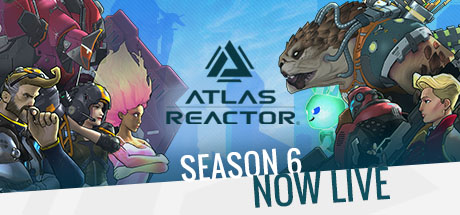
The store page still reads “SEASON 6 NOW LIVE!” — a frozen artifact of the game’s last major content update, now serving as an unintentional epitaph. It’s the multiplayer equivalent of a restaurant sign still advertising last year’s seasonal special long after the doors have been padlocked.
Key Failure Factors
-
Niche Genre, Niche Audience: Simultaneous-turn PvP tactics sits at the intersection of two small communities — tactical game fans and competitive multiplayer players. With 500K-1M owners on a F2P model, the game attracted a fraction of what successful F2P titles achieve (tens of millions). The 95:1 owners-to-review ratio confirms most downloaders bounced immediately.
-
Wrong Market, Wrong Moment: Launching five months after Overwatch into a market obsessed with real-time hero action was a timing disaster. The competitive multiplayer audience in 2016 wanted fast reflexes, not planning phases. Atlas Reactor’s innovation was also its barrier.
-
Trion’s Financial Collapse: Even a modest-but-stable community might have kept Atlas Reactor alive — but Trion Worlds’ 2018 acquisition by Gamigo killed any chance of continued operation. The studio’s financial problems meant content updates dried up well before the official shutdown, with Season 6 appearing to be the game’s last significant content drop.
-
Multiplayer-Only, F2P-Only Trap: Zero singleplayer content meant zero fallback when the multiplayer population dwindled. F2P meant low download commitment — easy to try, even easier to abandon. The combination guaranteed a steep attrition curve that a niche game couldn’t survive.
Lessons for Developers
-
Innovation without audience fit is a recipe for critical praise and commercial failure. Atlas Reactor earned 84% positive reviews for its unique mechanics, yet attracted only 500K-1M owners on a free-to-play model. The competitive multiplayer audience in 2016 wanted real-time action — the game’s biggest strength was also its biggest market barrier.
-
Multiplayer-only F2P games need massive concurrent populations to survive. With 500K-1M downloads but 0 current players, the game proved that F2P download numbers mask the real metric: concurrent players. A game that can only be played with other humans in real-time lives and dies by matchmaking times — and Atlas Reactor’s niche never generated the concurrent mass to keep queue times reasonable.
-
Studio financial health is the ultimate dependency for live service games. The 84% positive review score was irrelevant once Trion Worlds collapsed financially and Gamigo pulled the plug. Live service games are existentially dependent on their operator’s solvency — a lesson that applies to every always-online title.
Related Deaths
- LawBreakers — Another innovative multiplayer game that launched into Overwatch’s shadow and couldn’t find its audience despite strong design fundamentals and a high-profile studio.
- Duelyst — A simultaneous-turn tactical game that similarly proved the genre ceiling is below what a live service business model demands.
- Gigantic — A F2P hero-based competitive game that earned positive reviews but died when its studio couldn’t sustain the player numbers needed for matchmaking viability.