OFFICIAL DEATH CERTIFICATE
Blacklight: Retribution
Hardsuit Labs, Inc.
Born
2012-07-01
Game Over
2019-05-18
Lifespan (6.9 years)
Vital Signs
Advertisement
Autopsy Report
Autopsy Report
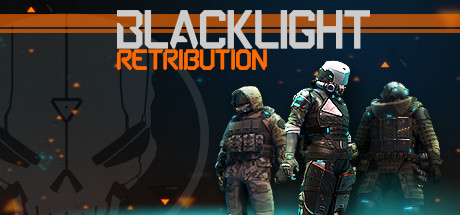
Blacklight: Retribution had one of the coolest ideas in FPS history: a visor that let every player see through walls. The Hyper Reality Visor (HRV) wasn’t a cheat — it was a core mechanic, fundamentally changing how you thought about positioning, flanking, and movement in a shooter. Combined with one of the deepest weapon customization systems in the genre, this free-to-play sci-fi FPS from Hardsuit Labs was genuinely ahead of its time when it launched in July 2012.
The problem with being ahead of your time is that the market catches up, then passes you, and then forgets you were ever there.
With 76% Mostly Positive reviews across 16,377 ratings, Blacklight: Retribution was well-liked. The 97.8 reviews per month velocity over its 84-month lifespan shows steady engagement. But 200K-500K owners for a free-to-play shooter over seven years is underwhelming — compare that to Warframe, which launched just one year later in 2013 and accumulated 50 million-plus players. Blacklight carved out a niche. Warframe built an empire.
The F2P shooter landscape of 2012 was nearly empty. Team Fortress 2 had gone free-to-play in 2011. Beyond that, options were scarce. Blacklight: Retribution was genuinely one of the best free shooters you could play. Then the market exploded: Warframe (2013), Planetside 2 (2012), Paladins (2016), Overwatch’s gravitational pull on the hero shooter space (2016), and finally the meteor strike of Fortnite (2017-2018). Each new entry siphoned players from the existing pool, and Blacklight couldn’t keep up.
Hardsuit Labs was a small studio self-publishing their own game. Without a publisher’s war chest to fund aggressive content updates, the game’s development cadence slowed as the studio shifted resources to other projects — most notably Vampire: The Masquerade - Bloodlines 2, which would later become its own cautionary tale. As content updates dried up, the meta stagnated, and matchmaking times increased as the population shrank.
By 2019, seven years after launch, Blacklight: Retribution had exactly 1 concurrent player. The HRV mechanic was still clever. The gun customization was still deep. But cleverness and depth couldn’t compete with the content velocity of better-funded rivals in a market that now offered dozens of free alternatives. The pioneer was left behind by the gold rush it helped start.
Key Failure Factors
-
The F2P Arms Race: Launching in 2012 when F2P shooters were scarce gave Blacklight early traction, but the advantage evaporated as Warframe, Planetside 2, Fortnite, and dozens of others flooded the market. With 200K-500K owners against Warframe’s 50M+, the scale gap was insurmountable.
-
Self-Publishing Without Scale: Hardsuit Labs handled development and publishing alone. Without external funding for aggressive content updates, the game’s live service couldn’t compete with publisher-backed rivals shipping entire games’ worth of new content every season.
-
Developer Attention Diverted: Hardsuit Labs shifted focus to Bloodlines 2 development, reducing Blacklight’s update cadence. For a live service game, reduced updates are a death sentence — players leave the moment content stagnates.
-
No Viral Moment: Despite genuine innovation (HRV, deep customization), Blacklight never had a cultural moment that brought in a wave of new players. In F2P, organic growth through streaming, esports, or word-of-mouth is essential — and it never materialized.
Lessons for Developers
-
Innovation doesn’t protect against market saturation. The HRV was genuinely unique and earned 76% positive reviews. But one innovative feature can’t sustain a live service game when competitors ship entire seasons of content. Innovation gets noticed; content velocity keeps players alive.
-
F2P first-mover advantage is fleeting. Launching in 2012 with minimal competition gave Blacklight early traction that was completely negated by 2019. In F2P, there are zero switching costs — players migrate to shinier alternatives the moment they appear.
-
Self-publishing F2P demands unsustainable investment. Without a publisher to fund continuous content, Blacklight’s revenue from a small audience couldn’t generate the content needed to grow that audience. The result was a shrinking spiral that no amount of clever design could reverse.
Related Deaths
- Dirty Bomb — Another F2P FPS from the same era that slowly bled players as better-funded competition arrived.
- Loadout — F2P shooter with deep weapon customization that launched in 2014 and shut down by 2018, following the same trajectory.
- Ghost in the Shell: First Assault — Sci-fi F2P FPS that shut down in 2018 after failing to compete in the crowded market.