OFFICIAL DEATH CERTIFICATE
Paragon: The Overprime
Netmarble F&C Team SoulEve
Born
2022-12-04
Game Over
2024-04-25
Lifespan (1.4 years)
Vital Signs
Advertisement
Autopsy Report
Autopsy Report
In April 2018, Epic Games did something unusual: they killed Paragon, their ambitious third-person action MOBA, and released $12 million worth of game assets for free. The message was clear — this market isn’t worth our time, but here are the tools if someone else wants to try. Two studios took the bait. Both bet that Epic was wrong about the market. The market sided with Epic.
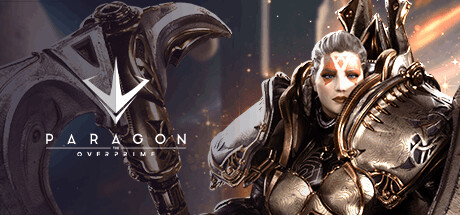
Paragon: The Overprime, developed by Netmarble’s SoulEve team, was one of two Paragon successors to emerge from Epic’s asset dump (the other being Predecessor). It launched into Early Access in December 2022 with a promise to resurrect and evolve the Paragon experience that thousands of fans mourned. The response was loud: 13,054 reviews accumulated at a velocity of 322 per month, one of the highest engagement rates in the dead games dataset. People had opinions about Paragon’s return.
Unfortunately, most of those opinions weren’t good. A 63% positive rate — “Mixed” on Steam — tells you the resurrection didn’t match the memory. The original Paragon had devoted fans who remembered it through rose-tinted glasses; Overprime had to compete against that idealized memory while also justifying its existence against every other MOBA on the market. The 37% negative rate is steep for a free game reviving a beloved IP, suggesting the gap between expectation and reality was wide enough to generate active disappointment.
The ownership data is the most striking signal in the dataset. SteamSpy estimates just 0-20,000 owners — an almost impossibly low number for a free-to-play game with 13,054 reviews. Even accounting for SteamSpy’s uncertainty, this suggests either extreme data collection issues or a player base so concentrated and vocal that nearly every player left a review. Either interpretation points to the same conclusion: the total addressable market for “people who want Paragon back” was vanishingly small.
The competitive dynamics made it worse. Overprime wasn’t just competing against LoL, Dota 2, and Smite — it was competing against Predecessor, the other Paragon successor built on the same free assets. Two games splitting an already-niche audience — third-person MOBA fans who specifically wanted Paragon’s gameplay — was an act of mutual destruction. Whatever audience existed for a Paragon revival was cleaved in half before either game could reach critical mass.
Netmarble, as a major Korean publisher, had the resources to sustain a longer runway. But even corporate backing has limits when the fundamental market thesis is wrong. The Early Access label — unusual for a game backed by a publisher of Netmarble’s size — suggests the team knew the game needed time to find its footing. It never did. Zero current players and a shutdown roughly 16 months after launch confirmed what Epic had concluded years earlier: the third-person action MOBA market simply isn’t large enough to sustain a live-service game.
The most painful data point is the comparison to Epic’s original decision. Epic Games — with billions in Fortnite revenue, the Unreal Engine, and the actual Paragon codebase — decided this market wasn’t worth pursuing. A smaller team using Epic’s donated assets was never going to find a market that Epic, with every possible advantage, couldn’t.
Key Failure Factors
-
The Market Epic Abandoned: Epic Games killed the original Paragon because the market was too small. Overprime’s 0-20K estimated owners and zero current players confirmed Epic’s analysis was correct.
-
Competitor Cannibalism: Two Paragon successors (Overprime and Predecessor) fought over the same niche audience, ensuring neither could reach the critical mass needed for healthy matchmaking. With 63% positive reviews, community division was evident.
-
322 Reviews/Month, Zero Retention: The high review velocity shows enormous initial curiosity. Zero current players shows zero follow-through. Nostalgia drives downloads; only gameplay drives retention.
-
Early Access from a Major Publisher: The Early Access label on a Netmarble-backed game signaled uncertainty about the product’s readiness, undermining confidence in a game that needed its community’s trust from day one.
Lessons for Developers
-
If the original failed with more resources, the revival probably will too. Epic had unlimited resources and the actual Paragon codebase. They decided the market was too small. Overprime’s 0-20K owners and zero players validated that decision. Before reviving a dead game, ask why it died — if the answer is “the market was too small,” revival won’t change the market size.
-
Competing successors split niche audiences fatally. Two Paragon successors fighting for the same tiny audience ensured neither reached critical mass. In niche markets, competition isn’t healthy — it’s fatal. Two games chasing 50,000 potential players each get 25,000, and neither survives.
-
Nostalgia is a download driver, not a retention driver. The 322 reviews/month velocity proves the Paragon brand still had emotional power. Zero current players proves emotional power doesn’t translate to sustained engagement. A revival must solve the problems that killed the original, not just recreate the experience.
Related Deaths
- Gigantic — Third-person MOBA-adjacent game with devoted fans that died from insufficient player base despite positive reviews.
- Nosgoth — Beloved IP revival that attracted nostalgic players but couldn’t sustain multiplayer population.
- Battleborn — Genre-hybrid that competed against a dominant competitor and lost everything.