OFFICIAL DEATH CERTIFICATE
Plain Sight
Beatnik Games
Born
2010-04-04
Game Over
2011-04-04
Lifespan (1.0 years)
Vital Signs
Advertisement
Autopsy Report
Autopsy Report
Plain Sight is the quietest death in this graveyard — a game that didn’t crash and burn so much as gently power down in an empty server room.
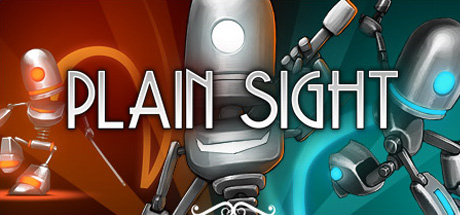
The concept was genuinely delightful: a multiplayer arcade game about suicidal ninja robots flying through space, leaping over planetoids, and destroying each other with katanas. Killing opponents let you steal their energy, making you “bigger, stronger, faster and generally more awesome.” It was weird, it was charming, and 67% of the 295 people who reviewed it thought it was fun. The problem wasn’t quality. The problem was that you needed other humans to experience it, and there were never enough of them.
Plain Sight launched on April 4, 2010 — an era before Discord servers, Twitch streaming, and the community-building infrastructure that might have given it a fighting chance. Beatnik Games was both developer and publisher, a small indie studio without the resources, reach, or marketing budget to build the critical mass that a multiplayer-only game demands. There was no singleplayer mode, no bots, no fallback. When the servers emptied, the game ceased to exist in any meaningful sense.
The data tells the story of a game that was always marginal. Just 295 total reviews across 16 years translates to 1.5 reviews per month — one of the lowest engagement velocities on Steam. The 169:1 owner-to-review ratio (against 50,000-100,000 estimated owners) suggests many copies were distributed through bundles or acquired during the free-to-play transition rather than through organic, enthusiastic purchases.
The multiplayer death spiral is predictable and merciless. As player count drops below a fun threshold, remaining players face longer queue times and worse match quality. They leave, which drops the count further, which creates longer queues. The spiral is unrecoverable without intervention — community events, marketing pushes, content drops, or bot backfill. Beatnik Games had resources for none of these.
The transition to free-to-play, visible in the game’s current genre tags, was likely a Hail Mary attempt to revive the player base. But F2P only works when there’s a product to experience on the other side. You can’t lower the price barrier to zero when the real barrier is “there is literally nobody to play with.”
Plain Sight reached 0 concurrent players within approximately one year of launch. Not 1. Zero. For a game that requires multiplayer to function, zero players means the product doesn’t exist anymore. It’s still listed on Steam, still technically downloadable, but it’s a menu screen with no game behind it — a digital ghost of a game about ghost robots.
Beatnik Games appears to have dissolved after Plain Sight, leaving no other notable releases. The studio’s only child died of loneliness.
Key Failure Factors
-
Zero Concurrent Players: A multiplayer-only game with 0 players is not a game — it’s a storefront listing for an unplayable product
-
1.5 Reviews Per Month: The lowest engagement velocity in this batch, indicating near-total market obscurity even during the game’s active period
-
No Population Fallback: No bots, no singleplayer mode, no private match options — when the last player leaves, the game is permanently broken
-
169:1 Owner-to-Review Ratio: Of 50,000-100,000 owners, only 295 reviewed — suggesting mass acquisition through bundles without genuine engagement
Lessons for Developers
-
Every multiplayer-only game needs a population survival plan. Plain Sight’s death was not a surprise — it was an inevitability without intervention. Bot backfill, singleplayer training modes, or asynchronous gameplay would have given the game life beyond its multiplayer dependency. Among Us survived years of near-zero population because private lobbies meant you didn’t need strangers.
-
Niche appeal is fatal for population-dependent games. “Suicidal ninja robots” is a brilliantly creative concept that appeals to a narrow audience. For singleplayer or co-op games, niche is fine. For competitive multiplayer, niche is a death sentence — you need thousands of concurrent players to sustain matchmaking, and niche concepts struggle to reach that threshold.
-
Self-publishing without community infrastructure dooms multiplayer games. Beatnik Games had no community manager, no Discord (it didn’t exist yet), no streaming partnerships, and no budget for community events. Multiplayer games are community products, and community products require ongoing community investment.
Related Deaths
- Battlecrew Space Pirates — Another quirky indie multiplayer game with a creative concept that died from the same empty-lobby syndrome
- Radical Heights — Multiplayer game that launched to insufficient population and never recovered, though on a much larger scale
- Fractured Space — Space-themed multiplayer game that followed the same pattern of promising gameplay with unsustainable player counts