OFFICIAL DEATH CERTIFICATE
Shattered Horizon
Futuremark
Born
2009-11-03
Game Over
2011-11-03
Lifespan (2.0 years)
Vital Signs
Advertisement
Autopsy Report
Autopsy Report
The graveyard is full of bad games that deserved to die. Shattered Horizon is not one of them. At 85% positive across 505 reviews — the highest approval rating in this batch by a wide margin — it’s the most beloved corpse in the cemetery. A game that was too innovative, too demanding, and too niche to survive, mourned by everyone who played it and unknown to everyone who didn’t.
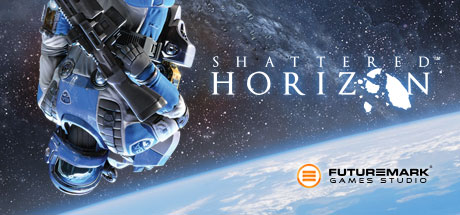
Futuremark — yes, the 3DMark benchmarking company — made exactly one video game. And it was brilliant. Shattered Horizon was a multiplayer FPS set in zero gravity, where astronauts fought across the debris field of a shattered moon. Combat happened in full 6-degrees-of-freedom: enemies could come from above, below, behind, or any angle in between. The concepts of “floor” and “ceiling” were abolished. It was disorienting, exhilarating, and unlike anything else on the market.
It was also a death sentence for the player count.
The barriers to entry were stacked impossibly high. First, Shattered Horizon required DirectX 10 hardware — a hard requirement, not a recommendation. In November 2009, a significant portion of PC gamers were still running Windows XP with DX9 graphics cards. Futuremark, being a benchmarking company, built the game to showcase cutting-edge hardware. Beautiful for marketing their benchmarking suite; catastrophic for building a player base. An estimated 100,000-200,000 owners is tiny for a multiplayer FPS — and many of those were likely hardware enthusiasts who bought it as a tech demo rather than a game they’d commit to.
Second, the 6DOF combat had a learning curve that could be measured in walls. Traditional FPS games train players to think on a 2D plane with occasional jumping. Shattered Horizon required genuine three-dimensional spatial awareness — tracking enemies who could be “behind and above” while you were “upside down relative to the station.” For the players who mastered it, the experience was transcendent (85% positive reviews don’t lie). For the majority who installed it, got disoriented, and uninstalled, it was motion sickness with guns.
Third — and this is the killing blow — the game launched in November 2009 alongside Call of Duty: Modern Warfare 2 and Left 4 Dead 2. The marketing equivalent of opening a boutique sushi restaurant between two McDonald’s on Super Bowl Sunday. MW2 consumed the entire FPS market’s attention. L4D2 captured the cooperative FPS audience. Shattered Horizon, with no marketing budget and a niche concept, was invisible.
The 2.5 reviews/month velocity — the lowest in this batch — confirms total obscurity. Over 200+ months on Steam, the game has accumulated 505 reviews at a trickle. For comparison, even delisted games like Super MNC managed 114/month. The “Last Stand” content pack, which added bot support for single-player, was Futuremark’s acknowledgment that human opponents had evaporated. The Steam description now reads like an epitaph: “Now includes the Last Stand pack: play all game modes in single player with bots.” Translation: nobody’s online, but here are some robots so you can experience what you’re missing.
Futuremark never made another game. They were acquired by UL (Underwriters Laboratories) in 2014 and returned to what they do best: benchmarking software. Shattered Horizon remains a one-of-a-kind artifact — proof that innovation and quality are necessary but not sufficient for survival, and that the most loved games can also be the most lonely.
Key Failure Factors
-
DX10 Hardware Requirement: In 2009, requiring DirectX 10 excluded a massive portion of PC gamers. For a multiplayer-only game needing critical mass, this was a self-imposed population cap that made sustainability impossible.
-
85% Positive, 505 Reviews: The highest approval rating in this batch and the lowest review count. Everyone who played it loved it; almost nobody played it. The 198:1 owner-to-review ratio and 2.5 reviews/month velocity define a cult classic, not a commercial product.
-
November 2009 Launch Window: Released alongside Call of Duty: Modern Warfare 2 and Left 4 Dead 2 — two of the biggest FPS launches in history. An indie zero-gravity FPS with no marketing budget was invisible.
-
6DOF Learning Curve: Zero-gravity combat was innovative but disorienting for mainstream FPS players. The mechanic that made the game special was also the mechanic that prevented mass adoption.
Lessons for Developers
-
Hardware exclusivity kills multiplayer games. Requiring DX10 in 2009 excluded the majority of PC gamers. Shattered Horizon’s 100K-200K owners — versus millions for contemporaries like MW2 — shows the cost. Multiplayer games must prioritize accessibility over visual fidelity. A beautiful game with empty servers is a screensaver.
-
Innovation without accessibility is a tech demo. 6DOF zero-gravity combat was genuinely revolutionary, but the learning curve limited adoption to enthusiasts. The 85% positive rating from 505 reviews proves those who crossed the barrier loved it — but 505 reviews proves almost nobody crossed the barrier. Innovative mechanics need gradual onboarding.
-
Launch timing matters more than launch quality. Releasing against MW2 and L4D2 in November 2009 meant Shattered Horizon never had a window to capture attention. Even a mediocre game launched in a quiet month would have had better odds. The 2.5 reviews/month velocity — sustained across 200+ months — confirms the game never had a moment of mainstream discovery.
Related Deaths
- Fractured Space — Another space combat game with strong reviews that died from insufficient player population.
- Hawken — Visually impressive multiplayer FPS that couldn’t sustain its player base despite critical acclaim.
- Tribes: Ascend — Innovative FPS with a devoted cult following that was abandoned when the studio shifted priorities.