OFFICIAL DEATH CERTIFICATE
Splitgate
1047 Games
Born
2019-05-23
Game Over
2024-09-01
Lifespan (5.3 years)
Vital Signs
Advertisement
Autopsy Report
Autopsy Report
Splitgate is the only game in this graveyard that was killed by success. With 111,009 reviews at a 91% positive rate — the highest review count and one of the best scores in our entire dataset — this free-to-play arena shooter wasn’t dying when its studio pulled the plug. It was being sacrificed so something bigger could take its place.
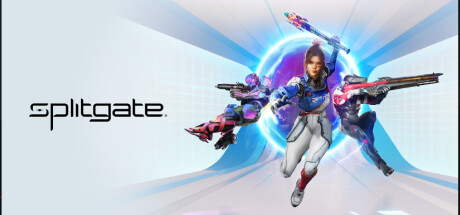
“Halo meets Portal” was the pitch, and it delivered. Developed by 1047 Games, a studio started by two Stanford students, Splitgate combined classic arena shooter gunplay with player-placed portals that added a spatial dimension no FPS had ever achieved. You could place a portal behind an enemy and shoot them through it. You could rocket-jump through a portal into a flank. You could chain portals across the map for impossible angles. The core mechanic was pure, brilliant, and generated clips that made every viewer want to download the game immediately.
Which is exactly what happened in July 2021. The game’s open beta on consoles went nuclear. Servers crashed under the weight of over 100,000 concurrent players on Steam alone. Queue times exceeded 60,000 people — and the queue itself became a meme that drove even more downloads. Content creators couldn’t stop posting portal trick shots. In a single summer, a game that had been quietly chugging along in Early Access since 2019 became the biggest story in multiplayer gaming.
The money followed. 1047 Games raised over $100 million in venture capital funding, valued at $1.5 billion. For a game built by fewer than 10 people, the numbers were staggering. The 1,328.2 reviews per month velocity — by far the highest in our dataset — captures the extraordinary engagement that summer generated.
But then came the hangover. The tiny team that built Splitgate couldn’t produce content at a pace that matched its newly massive audience’s expectations. Players who came from Fortnite and Apex expected weekly updates, new maps, new modes, fresh cosmetics. Splitgate delivered modest seasonal updates that satisfied its core fans but couldn’t retain the viral wave. The player count declined steadily from 100,000+ to the low thousands, then hundreds, then dozens.
Rather than fight the content war with patchwork, 1047 Games made a radical bet: kill Splitgate and build Splitgate 2 from scratch. The original game’s Unreal Engine 4 foundation, built by students on a shoestring, couldn’t be retrofitted into the AAA-quality platform the audience demanded. Servers were shut down in September 2024. The 12 concurrent players at time of data collection represent the final stragglers of a game that proved a concept worth billions.
Key Failure Factors
-
Viral Success Created Unsustainable Expectations: 100,000+ concurrent players driven by a team of under 10 developers meant the audience’s content expectations far exceeded the studio’s capacity. The 1,328.2 reviews/month velocity shows the intensity of engagement; the decline from 100K to 12 concurrent players shows the impossibility of meeting those expectations.
-
Technical Foundation Couldn’t Scale: Built on UE4 by students, the original game’s architecture couldn’t support the content pipeline a live service AAA game requires. The studio concluded that rebuilding from scratch on UE5 would be faster than retrofitting the original.
-
Strategic Shutdown, Not Market Failure: Unlike most dead games, Splitgate was deliberately killed. 1047 Games chose to shut down a game with 91% positive reviews and 5-10M owners to focus resources on Splitgate 2. This is a bet, not a failure — but the original game is still dead.
-
Content Drought Post-Viral: After the summer 2021 explosion, updates slowed and couldn’t keep pace with audience expectations set by Fortnite and Apex. Each season retained fewer players, following the classic live service decay curve.
Lessons for Developers
-
Viral moments create obligations that small studios can’t fulfill. Splitgate’s summer 2021 proved the concept works. The subsequent decline proved that a small team cannot produce content at the pace viral audiences demand. Going viral is the best and worst thing that can happen to an indie multiplayer game.
-
Technical debt from a successful prototype can justify starting over. 1047 Games concluded that patching student-built UE4 code into AAA quality would take longer than rebuilding on UE5. The 91% positive reviews validated the concept; the declining player count validated the need for a new foundation.
-
Killing a beloved game for a sequel risks everything. The community goodwill stored in 111,009 overwhelmingly positive reviews is not infinite. Splitgate 2 must deliver on the original’s promise or the studio will have destroyed a working game with millions of fans for nothing. The bet is still outstanding.
-
“Halo meets Portal” is a proven concept. Whatever happens to Splitgate 2, the original game proved that portal mechanics in competitive FPS have massive appeal. 5-10M owners and 91% positive reviews are the market validation every game developer dreams of.
Related Deaths
- Overwatch (original) — Blizzard shut down the beloved original Overwatch to launch Overwatch 2, a controversial decision with mixed results that demonstrates the risks of the “kill the predecessor” strategy.
- Paragon — Epic killed a game with a dedicated community to focus resources elsewhere, though in that case the successor (Fortnite) was a different game entirely.
- Halo Infinite — Microsoft’s attempt to revive arena shooters struggled with its own live service content drought, validating 1047 Games’ concerns about the difficulty of sustaining the genre.